What it is about

Dear friends,

We started this blog in order for people to debate. The first few opinions I put up for debate were mostly controversial African issues, mainly politics intertwining with the abuse of rights. Please feel free to comment as it will motivate us to keep posting. If you have any topics you find controversial and excellent for debate, please send it to either of us with your name and I will post as soon as possible with your name to show that it is yours.

Monday, 23 December 2013

Mismanagement of Resources

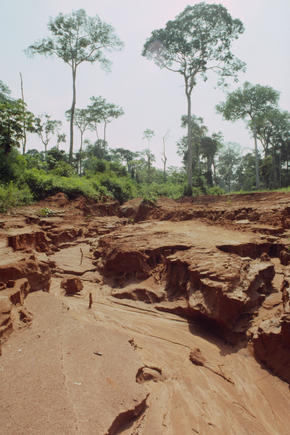
http://www.eco-pros.org/naturalresources.htm
Within every area where there is some form of a population of a living organism there usually tends to be one person who assumes the role as the leader and sole decider on the methods of living, conduct and improvement of the conditions. This usually results in reforms and change in tactics, or none at alll in effort to keep the population just a breath above stability. 

However, there is a saying "With power comes greed." People soon succumb to the greed that greets them at every doorstep and what was once a successful and progressive region, now walks into the future with nothing but the terrible pain and anguish they suffered in the past before their lives saw so much beauty. 

The 2004 Nobel Peace Prize Winner, the late Wangari Mathaai  said  "Development to me is a quality of life. It's not necessarily acquisition of a lot of things. I have been using the example of an African stool. An African stool has three legs. On those legs balances a basin. One of those three legs is peace. Another is good governance. And the other is good management of our resources. Now this good management of our resources, as I've said, includes equitable distribution -- allowing as many people as possible to share in the natural resources. This allows as many people as possible to experience respect, dignity."

Misplaced priorities and misappropriation of assets in any given budget is what some may say is the inhibiting the growth of areas? However can Mathaai's idea of equitable distribution be achieved or is just another dream that cannot be implemented into the reality of life? There are many theories and ideas that are proposed such as this but is this particular better management of resources possible or simply just another writing on paper?

Thursday, 28 November 2013

IS WOMEN IN-POWERMENT THE ONLY WAY OF EMPOWERMENT?


Gender inequality has been an issue in both the local scene and the international arena with women fighting for equal opportunities with men if not greater ones. Looking at women in powerful political seats is the assurance we need to prove that women in Africa and Kenya to be specific are really being empowered.  In the new Kenyan constitution women are further empowered with 47 assured women representative posts in the senate and a few other elective posts. Such seats taken up by women such as Millie Odhiambo are some of the testimonials we have of empowered African women, however a conversation with a group of friends gets me thinking, is this the only way to empower women? Is this even empowering women? And I ask myself what exactly is empowering women? Think of the woman in Turkana south with about 4 children how do you empower this woman to make them self-reliant, to make them know the difference between arrogance and assertiveness, to make her able to provide for her children in the right manner. Maybe answering such questions is our way of finding out how to empower women.
         Giving  women many politically assured seats is not the way to empower them, what we need is  to make women people , by people I  mean that awareness should be created to let it be known that women also have a voice and don’t need  posts reserved for them because that’s not what it takes for them to be empowered. Let’s be realistic all this posts reserved are they left for us  because we now have gender equality or is it because we just want to harsh up the talk concerning gender discrimination? Political seats are not the only form of empowerment or are they? How many political seats are there in one government? Are they even enough for half the population of Kenyan women? No. what we need is a system to get to each and every woman, make them believe in themselves then push the rest of the population forward.
      But then again these reserved seats can be a boost to the woman, an avenue to use to push other women forward. An avenue to start projects that will make women self-reliant. A way to show other women that they to have a voice and its time they showed it. These seats may not necessarily be for all women but the whole idea is to put a fraction of the women out there to help others and to implement policies in favor of women.

   Are we as Africans using in-powerment to empower women?, is it working?  And is it only way we can use to reach out, to make our nations stronger?

Tuesday, 18 June 2013

A Democratic Dictatorship or Monarchy?

Most people regard a dictatorship or monarchy as barbaric and uncivilised due to the stereotypic ideologies an images people have of areas with this sort of leadership facing severe conflict due to these types of leaders oppressing the people. 

In many cases this has been proven to be true, however have we ever thought that in some nations (as hard as it may be to imagine) this type of leadership may essentially be the best for the people. In addition, have we ever thought that some of these leaders are supported by the people they lead? Even though there are the disadvantages, these leaders manage to control the situation within the area to suite firstly themselves but also their nation as most dictators have this nationalistic and patriotic passion to bring it's nation to glory. 

With the recent gruesome removal of General Gaddafi in Libya 2 years ago and the last ruling monarch of a nation in Africa beginning to face extensive criticism. It is time we reviewed the glories and failures of some dictators and monarchies in Africa:  starting with Gaddafi we may attempt to find the reason why he committed some of the acts he did was it due to pure malice? or did he have a driving force to make his desert country autonomous of the western power  according to reliable sources Gaddafi oversaw the building of the greatest man made river of our time built in Libya his dream being to provide fresh water for the peope of Libya.  Was he really a bad leader? or someone driven by the ambition to see his country succeed?

Not to far from Africa to the West we find Fidel Castro, a man said to have been an extreme marxist and totalitarian yet when you look at his country i would like to say he removed them from a ditch and put them on level ground. Don't you think the people of Cuba needed such a leader at that point of their countries development? For the them to attain autonomy they needed a man of different mettle one capable of going against the western nations for the sake of his country.

Now as much as dictatorship or monarchy is looked down upon by societies that have a liberal democracy for reasons such as the people are oppressed and do not support the people in power. However, many countries within Africa are now facing a lot of turmoil against the leaders they have 'democratically elected' yet this is meant to be the 'civilised' and 'correct' way of people coming into power. Monarchy and Dictatorship has its flaws but also its peaks, so does democracy.

In your opinion would you rather an extreme monarchy or dictatorship that actually helps the people and the majority of the population is content with, or a democracy that does nothing for the people but instead tries to enlarge the size of their bellies and leads to the discontent within the majority of the people?

Saturday, 11 May 2013

Is it alright to displace people off wildlife areas in effort to preserve the environment?


With a growing population not only in Africa but globally, there is a great increase in demand of land for shelter and work where there is no available space unless...
   Forest and natural areas are cleared for settlements to be built, whereby animals are displaced due to the loss of their habitats and in most cases eventual death and extinction.
 

A study by the Food and Agriculture Organization (FAO) reported that during the decade from 1980 to 1990, the world's tropical forests were reduced by an average of 15.4 million hectares per year (0.8 percent annual rate of deforestation). The area of land cleared during the decade is equivalent to nearly three times the size of France. Imagine that?
   However, in some areas indigenous cultures and traditions have managed to live in symbiosis with the wildlife around them in effort to survive with all the available neccessities. One of these cultures are the Maasai who have been living in gaming land with their herds and whom have recently faced pressure to relocate and leave the area.
    Even though the animals do face great threat and danger from people interfering within the 'ways of nature', what happens to those who took the initiative to find a way to create their own shelter and work but are forced to end up majority of the time on the streets? Is there a way to possibly preserve the wildlife whilst still managing to provide shelter space for people especially in our continent? Or are we forced to disregard human rights in effort to preserve animal rights?


Friday, 3 May 2013

IS FOOD SECURITY THE CAUSE OF CIVIL WARS?


An inauguration is supposed to be a lively event. One of those where we get to see our political leaders in a different light. We get to see the people in them because for once they are not making promises but eating the fruits of their labor just to say the least but a comment made by the president of Uganda Yoweri Museveni during president Uhuru Kenyatta’s inauguration sent my mind sprawling in thought.
 He said that the Pokot are stealing his cattle i.e. the cattle of the people of Uganda. At first I thought how absurd but think about it, is it really that absurd?
Have you ever thought of the implications of such utterances to the regional relations between two countries?  Or let’s say his words were true the implications of such actions by the Pokot to the relations between Kenya and Uganda?
I don’t mean to be alarming or look like I want to create a mountain out of a mere mole hill but that is the very cause of some of the civil wars we have witnessed in Africa over the last decade. It is such small matters that can pass for absurd ideas that cause bloodshed and death of innocent people.
 The factor behind this is idea is food insecurity; it is this competition for resources that generates cycles of hunger and hopelessness that are likely to bred violence. The cycles occur mostly in areas with great population dispersion over the national territory and thus prove difficult for the government to control rebel groups that might spring up.
But is it really fair to blame our wars on food security? When we are resting on our laurels, a vast majority of our population is ignorant and we get swayed easily by the wind blown by our political leaders to do whatever they want? Is it really food security that is the problem or are we sitting on a stool without all three feet?
Much as we would like it to be food security alone we can’t ignore the fact that we are failing in other areas thus we are hurting each other with our continued hostility towards each other. But what is the way forward do we focus on one side and try solve one issue at a time and watch the other issues grow or do we act blind to everything except that which we want to be the main factor. I don’t but I think you just might be the next Einstein with your contribution to this topic. It’s your Eureka moment

Can Equality ever be fully sustained?

With two female presidents in Africa and women now battling men for political seat, it is now more than ever that women within our continent are beginning to rise up to the same level to their male
counterparts.
Equality on a widespread scale can be argued to be idealistic, as women are mostly naturally sculpted and gifted for certain sectors whereas men are sculpted for other tasks as well. A woman is originally seen as a mother who nurtures and teaches the value of morals and life skills, whereas the man is seen as the breadwinner who goes out into the ‘wild’ to bring back the food.
Nevertheless, during this century there has been an overturn between the responsibilities of both genders. African men have become more reluctant to work and instead decide to be the ones to up bring their children, whilst women more focused than ever have gone out into what was once a male dominated ‘wilderness’.
A woman once told us that religion, tradition and morals are passed through the mother as only the mother knows the father of the child and has the emotional capability of teaching her child of how to deal with emotions. A man on the other hand has the mentality to make decision based majority on logics of gaining the best out of it. Imagine Didier Drogba the Ivorian Captain & striker playing in defence. Now Drogba could do well in that position but he would be most effective up-front as a strikers. How does it relate? Place either women or men as Drogba, then their most effective position in life as striker and the least effective as defence.
Yet for there to be leadership or a sense of control one must be lower than the other. Equality can be achieved in certain scenarios as seen in our world of today, but can we sustain this equality or are the laws made just pen on paper and not actually implemented?
In the words of Golda Meir, “To be successful, a woman has to be much better at her job than a man” Does this mean that men are naturally better than women at being decisive or are women becoming Africa’s new men? Why try to be the man when women are the most valuable part in human life?


Sunday, 1 April 2012

Child Soldiers


   The area that is usually terrorised in DRC by the Lord Residence Army is in the North-Eastern part of Congo in the Orientale province. In this province MONUC believes over 30,000 children have been abducted from areas such as Doruma, Faradje and Dungu. This is due to the Lord Residence Army that has been terrorising Southern South Sudam, North-Western Uganda which is also their Headquarters in a village called Lira. The Lord Residence Army which is lead by Joseph Kony has been terrorising this parts of the three different nation for nearly a quarter of a century.
   The ideology behind abducting children to use as child soldiers is that they are easily replaceable because they are less likely to rebel due to fear and they are easily found in school's for example. The toll of abducted children is estimate to be more than 70,000 and nearly half come from DRC alone.
   Upon the invasion and abduction each area experience a mass rape and murder within that community. It has only been 3 months into this year 2012, yet 60 girls have been drowned and in the 70,000 children abducted 5,000 of them are girls who are used as sex slaves within the camp and in arms dealing.
   Organisations have been set-up in different areas of DRC and other nations that face the abduction of children to use as child soldiers, an example of an organisation that saves, treats and help the children return to the public, after being socially accepted is War Child, which has a base in South-East of DRC (Sud-Kivu or Bukavu).
    At the moment it is safe to say that DRC – not including Orientale province- is relatively safe, apart from the occasional violent protests due to elections. All three nations terrorised by LRA have defined their armies along with the help of MONUC a UN military sector to arrest and put an end to the terror by the LRA rebels.
     On a wider scale, AL-shabaab another terror group also have their form of recruiting children into their sectors. Last year alone it was stated that in nearly all of LEDC countries, 75% of those participating in violent conflicts were the youth, ranging from the age of 8 upwards. This is taking into account that in Africa there have been very many civil wars such as the one in Rwanda, Burundi and DRC. Shockingly enough the former president of DRC the late Laurent Desire Kabila also used a form of child soldier before he was president, when he was still assisting Che Guevera.
  So why is it that we are so ignorant in helping prevent this?